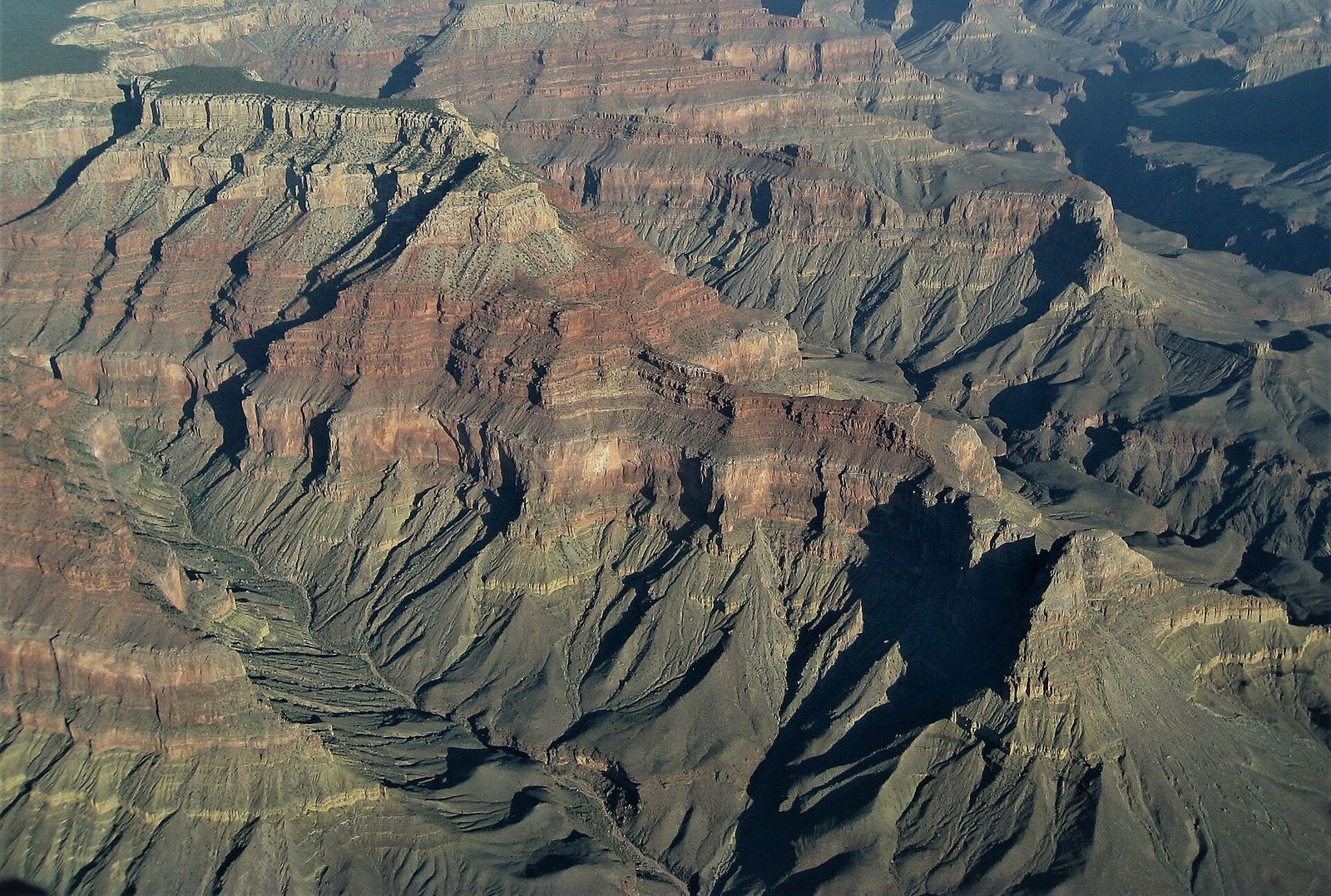
Marsh Butte
A river-gorge summit named for a paleontologist, seen from Pima Point
About
Marsh Butte is a deep-canyon summit rising over 2,300 feet above the Colorado River in Granite Gorge, roughly eight miles northwest of Grand Canyon Village. At 4,721 feet, it stands next to Diana Temple, with Tower of Ra directly across the gorge on the far side of the river. You won't hike to the top of this one — it's a scramble objective for canyon mountaineers, first climbed in 1977 via its class 4 east ridge — but you can pick it out from Pima Point on the South Rim and from stretches of the Tonto Trail below.
What it's built from
- Redwall Limestone caps the formation
- Beneath that sits the Cambrian Tonto Group
- Vishnu Basement Rocks, some of the oldest exposed rock in the canyon, show at river level in Granite Gorge
Like many inner-canyon buttes, it briefly carried a mythological name — "Endymion Dome" — before the Board on Geographic Names renamed it in 1906 for paleontologist Othniel Charles Marsh.
Best Time to View It
Pima Point is on the Hermit Road shuttle route, which runs seasonally — check current shuttle status before planning around this viewpoint.
Good to Know
- Redwall Limestone caps the formation, sitting above the Cambrian Tonto Group, with Vishnu Basement Rocks — some of the oldest exposed rock in the canyon — showing at river level in Granite Gorge.
- Like many inner-canyon buttes, it briefly carried a mythological name, "Endymion Dome," before the Board on Geographic Names renamed it in 1906 for paleontologist Othniel Charles Marsh.
- Look for it alongside Diana Temple from the same Pima Point vantage.
Where to See Marsh Butte
You can pick it out from Pima Point on the South Rim and from stretches of the Tonto Trail below.
What You're Looking At: Marsh Butte
Marsh Butte is a deep-canyon summit rising over 2,300 feet above the Colorado River in Granite Gorge, roughly eight miles northwest of Grand Canyon Village. At 4,721 feet, it stands next to Diana Temple, with Tower of Ra directly across the gorge on the far side of the river. You won't hike to the top of this one — it's a scramble objective for canyon mountaineers, first climbed in 1977 via its class 4 east ridge.
Reviews
See all on GoogleNo reviews yet for this listing.