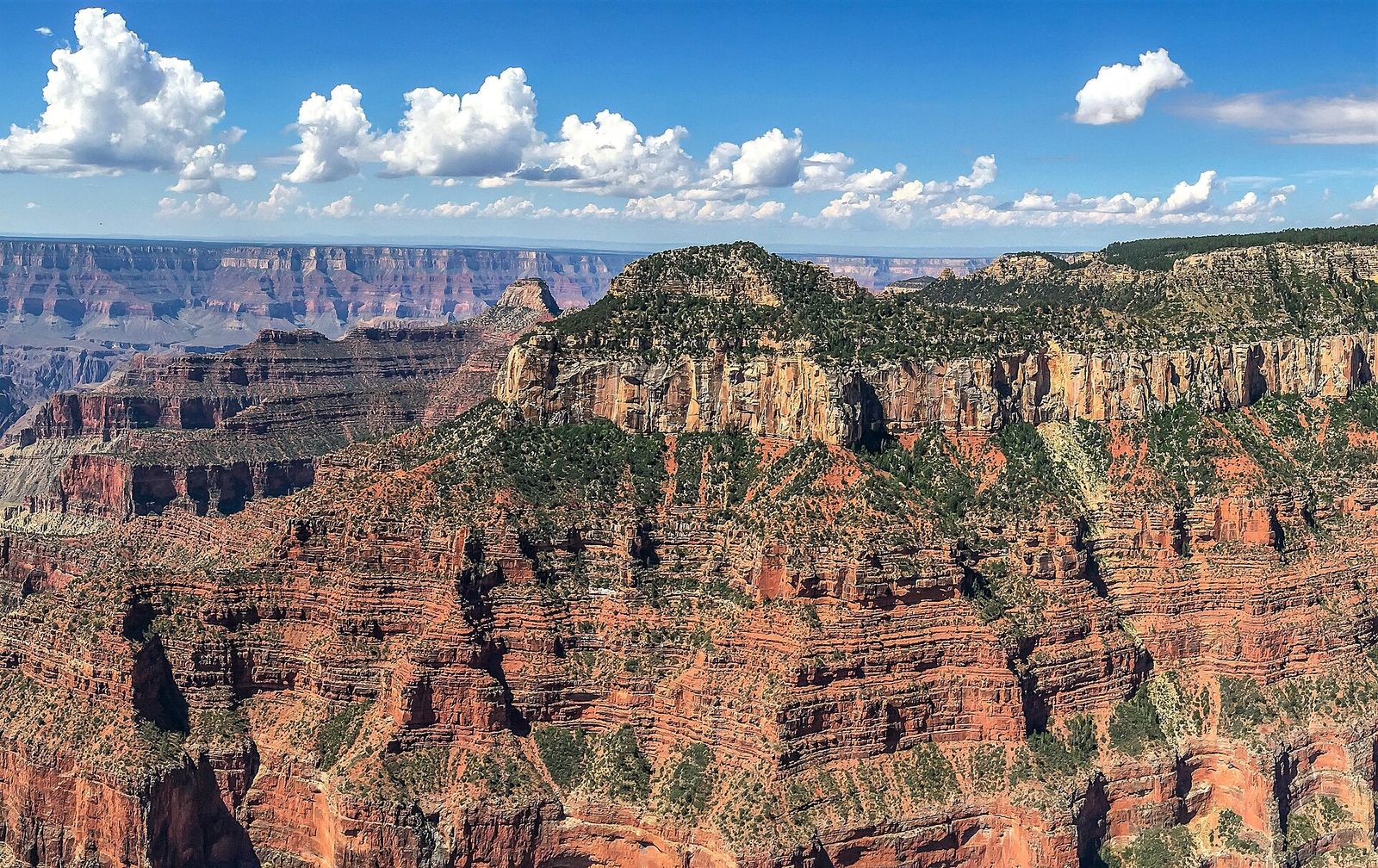
Oza Butte
A narrow sandstone tower across the Transept from Widforss Point
About
Oza Butte is a narrow tower of Coconino sandstone rising east of Widforss Point on the North Rim, standing across The Transept from the rim itself at roughly 8,068 feet. The name comes from a Paiute word for a narrow-necked basket, a fitting description for its slender profile. You won't hike to its summit on a maintained trail — reaching the top involves off-trail scrambling through brush and rock bands that isn't signed or recommended for casual visitors — but the butte itself is a prominent landmark seen from the Widforss Point Trail, a 10-mile round-trip route that follows the rim of Transept Canyon before cutting through ponderosa and aspen forest to Widforss Point.
Seeing it
- Best viewed from Widforss Point Trail, which starts near the North Rim entrance road
- The first few miles trace the rim above Transept Canyon, with Oza Butte visible across the drainage
- North Rim facilities are day-use only for 2026; no potable water is available on the North Rim, so carry your own
Best Time to Visit
North Rim facilities are day-use only for 2026; no potable water is available on the North Rim, so carry your own on the 10-mile round-trip Widforss Point Trail.
Trail Tips
- The butte itself is a prominent landmark seen from the Widforss Point Trail, a 10-mile round-trip route that follows the rim of Transept Canyon before cutting through ponderosa and aspen forest.
- Budget a full day for the Widforss Point Trail given its length, not just a quick stop.
- Carry all your own water — none is available anywhere on the North Rim in 2026.
Where to See Oza Butte
Best viewed from Widforss Point Trail, which starts near the North Rim entrance road. The first few miles trace the rim above Transept Canyon, with Oza Butte visible across the drainage.
What You're Looking At: Oza Butte
Oza Butte is a narrow tower of Coconino sandstone rising east of Widforss Point on the North Rim, standing across The Transept from the rim itself at roughly 8,068 feet. The name comes from a Paiute word for a narrow-necked basket, a fitting description for its slender profile. You won't hike to its summit on a maintained trail — reaching the top involves off-trail scrambling that isn't signed or recommended for casual visitors.
Reviews
See all on GoogleNo reviews yet for this listing.