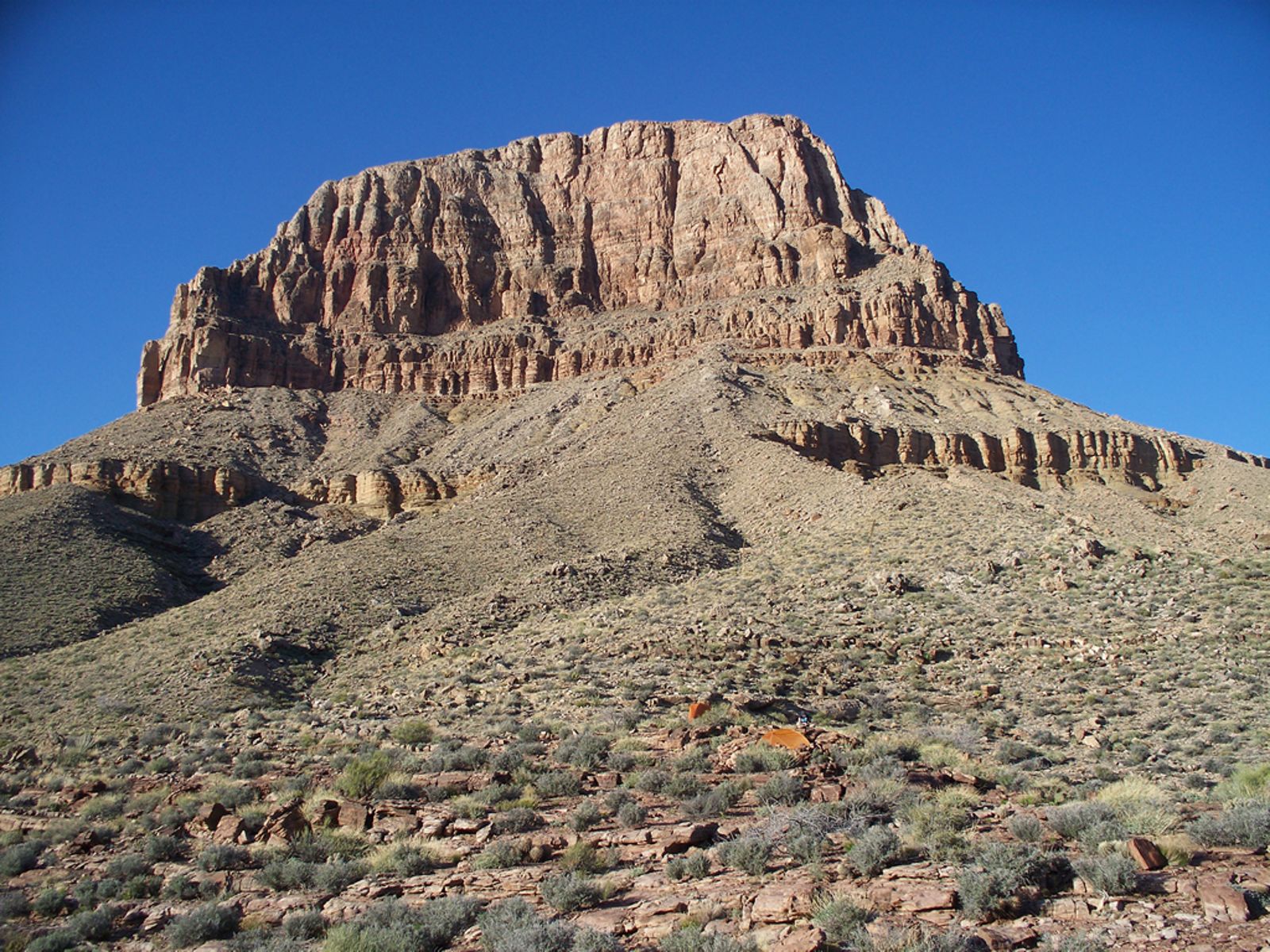
Sumner Butte
A named butte above Phantom Ranch, seen from the Clear Creek Trail
About
Sumner Butte is a rock formation deep in the inner canyon, sitting at the end of Zoroaster Temple's long west arm above the confluence of the Colorado River and Bright Angel Creek. At roughly 5,126 feet in elevation, it rises about 2,500 feet above Phantom Ranch below, with a striking southwest face that stands out even though its modest prominence (about 106 feet) keeps it from ranking as a true stand-alone summit. It's named for Jack Sumner, head boatman on John Wesley Powell's 1869 Colorado River expedition through the canyon.
Seeing it
Sumner Butte isn't a hike in itself — it's a landmark you pass beneath on the Clear Creek Trail, which crosses the Tonto Platform east from Phantom Ranch toward Clear Creek. Hikers on that trail get a close view of the butte's face as the route skirts its base. There's no visitor access to the summit itself; this is a formation to look at and orient by, not a destination trail.
Best Time to See It
Since it's viewed while hiking Clear Creek Trail, the same seasonal heat and exposure considerations for that trail apply.
Good to Know
- Hikers on the Clear Creek Trail get a close view of the butte's face as the route skirts its base.
- There's no visitor access to the summit itself; this is a formation to look at and orient by, not a destination trail.
- Its modest prominence (about 106 feet) keeps it from ranking as a true stand-alone summit, but the face itself is a striking landmark on the trail.
Seeing Sumner Butte
Sumner Butte isn't a hike in itself — it's a landmark you pass beneath on the Clear Creek Trail, which crosses the Tonto Platform east from Phantom Ranch toward Clear Creek.
What You're Looking At: Sumner Butte
Sumner Butte is a rock formation deep in the inner canyon, sitting at the end of Zoroaster Temple's long west arm above the confluence of the Colorado River and Bright Angel Creek. At roughly 5,126 feet in elevation, it rises about 2,500 feet above Phantom Ranch below, with a striking southwest face. It's named for Jack Sumner, head boatman on John Wesley Powell's 1869 Colorado River expedition through the canyon.
Reviews
See all on GoogleNo reviews yet for this listing.