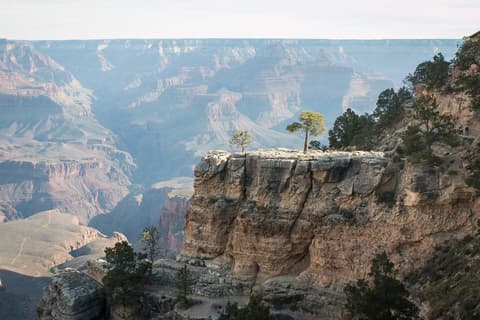
Day HikeGrand Canyon interior
Bright Angel Trail
The classic descent from the South Rim toward the Colorado River
(0)
December Grand Canyon weather: South Rim highs near 43F, Phantom Ranch mid-50s, snow chances, North Rim fully closed, crowd levels, and what to pack.
December brings the Grand Canyon's coldest stretch alongside its quietest crowds, and the two rims of elevation between South Rim and inner canyon still tell two different weather stories. This is a month for travelers who want solitude at the overlooks, don't mind real winter conditions, and are comfortable planning around ice, short daylight, and a fully closed North Rim. It suits photographers chasing snow-dusted views, budget-minded visitors chasing the year's cheapest lodging rates, and hikers willing to dress for a 20-plus degree swing between the rim and the river. It's a poor fit for anyone hoping to visit the North Rim or expecting summer-style crowds and programming — December offers a stripped-down, cold-weather version of the park, with the South Rim carrying the entire visitor experience.
On the South Rim, at just under 7,000 feet, daytime highs average around 43F with overnight lows in the upper teens to low 20s, and snow is common through the month. Average precipitation for the month is around 1.6 inches, most of it snow, with totals swinging hard year to year — about one December in four brings 9-10 inches or more of snow, while another quarter of years see two inches or less. Drop a mile down into the inner canyon and conditions shift fast: Phantom Ranch, at about 2,460 feet along the Colorado River, averages highs in the mid-to-upper 50s with lows in the mid-30s, roughly 20-25 degrees warmer than the rim on the same day. Snow is rare at Phantom Ranch, and the corridor stays mostly cold and dry.
December is one of the quietest months of the year at the park, typically running neck and neck with January for the lowest visitation. Daily visitor counts on the South Rim drop to a fraction of summer levels, and the days around the holidays are the one exception — Christmas week and New Year's draw a noticeable bump in day-trippers, though nothing close to spring or summer congestion. Outside that holiday stretch, overlooks like Mather Point and Yavapai Point are easy to enjoy without a crowd, and parking is rarely an issue. Time rim walks for late morning through early afternoon, after overnight ice has had a chance to melt off south-facing pavement, and lodging both inside and near the park sits at its cheapest rates of the year.
With the North Rim closed for the entire month, build your itinerary around the South Rim only. Walk the paved Rim Trail between overlooks like Mather Point and Yavapai Point, timed for late morning through early afternoon once ice has melted off south-facing pavement. Drive Desert View Drive for quieter viewpoints and the Desert View Watchtower, checking road conditions first since the route can ice over after a storm. Hikers comfortable with winter conditions can descend the Bright Angel or South Kaibab trails toward Phantom Ranch, carrying traction devices for icy switchbacks near the top even when the trailhead looks clear. December's thin crowds also make it a strong month for photography at the overlooks and taking advantage of the year's best lodging deals.
Plan for a 20-plus degree gap between rim and river, and another 25-35 degree swing between a December night and midday sun on the rim. Pack insulated, waterproof boots and traction devices (microspikes) for icy sections near the trailheads, along with a warm hat, gloves, and a windproof shell — wind on the exposed rim can make a 43F day feel much colder. Bring a midweight insulating layer over a base layer you can shed if you descend into the canyon, since conditions warm quickly toward Phantom Ranch. Sunglasses and sunscreen still matter even in winter, since high elevation and light reflected off snow add up quickly. If you're driving in from Williams or Flagstaff, check road conditions before you leave, since Desert View Drive and the approach highways can ice over after a storm.
Ice builds up on the paved Rim Trail and at overlooks after storms and can linger in shaded spots for days. The Bright Angel and South Kaibab trails lose elevation quickly enough that conditions can go from icy switchbacks to dusty, dry trail within the first mile or two, so hikers descending often start at the trailhead in a parka and are down to a fleece by the river. The free shuttle runs its reduced winter schedule (Village/Blue and Kaibab Rim/Orange routes), and Hermit Road opens to private vehicles since the shuttle-only Hermit's Rest route is suspended. The North Rim, including Highway 67 and the North Kaibab Trailhead, is fully closed to all visitor access in December and won't reopen until mid-May at the earliest — a closure compounded by the 2025 Dragon Bravo Fire, which destroyed more than 70 structures including the historic Grand Canyon Lodge, so any 2026 reopening is expected to be phased and day-use only, with no lodging, food, water, or fuel available.
Average temperature and precipitation across the year — December highlighted.
The classic descent from the South Rim toward the Colorado River
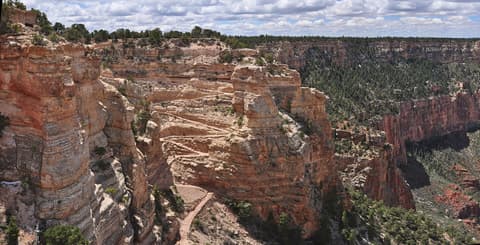
A ridge walk into the canyon with views from the first switchback
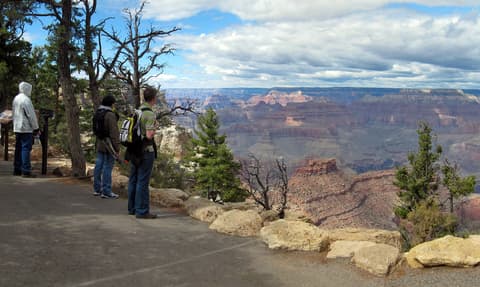
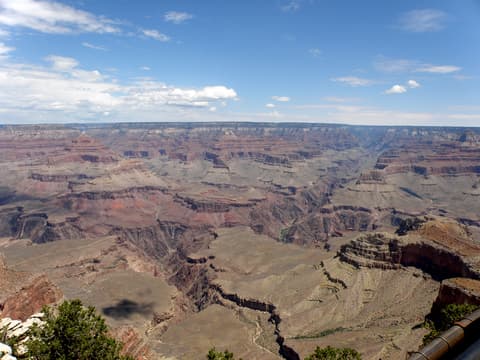
The South Rim's first big view, steps from the Visitor Center
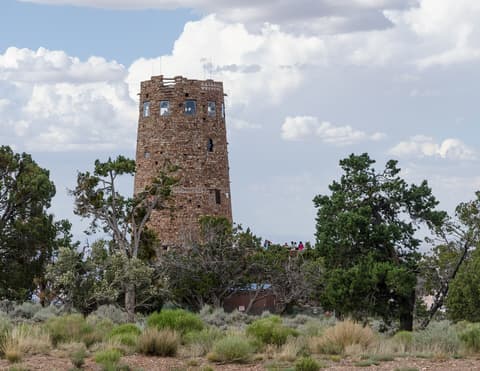
Stone tower rising 7 stories designed in 1932 by Mary Colter, a pioneering Grand Canyon architect.
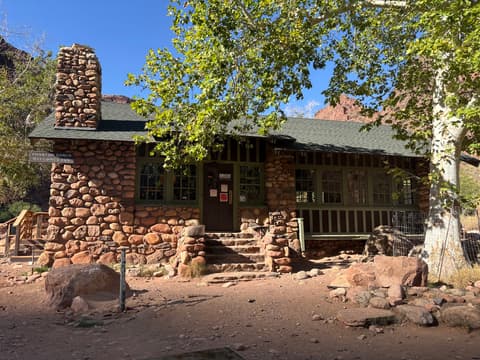
Rustic cabins & dorms in a stone lodge below the Canyon rim, plus a canteen offering meals.
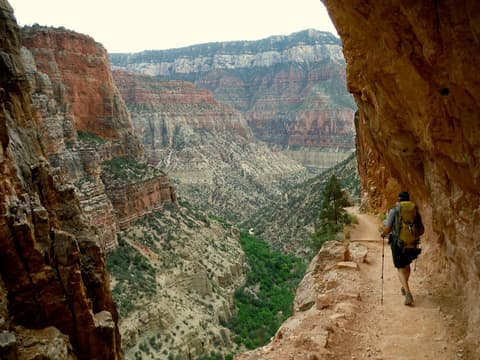
The North Rim's steep, quiet descent into the canyon
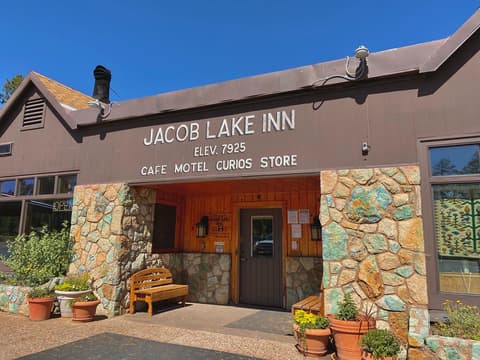
Wooded property offering hotel rooms, motel rooms & cabins, plus an American restaurant & a bakery.
Check the latest Grand Canyon National Park conditions, hourly outlook, and 16-day forecast before you go.
View Live Grand Canyon National Park Weather →