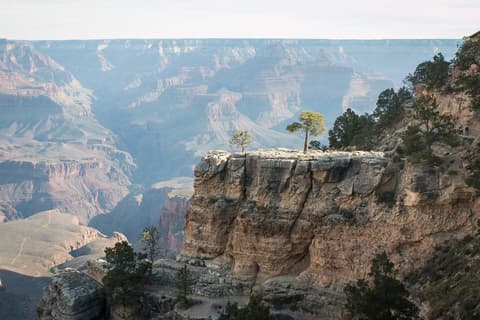
Day HikeGrand Canyon interior
Bright Angel Trail
The classic descent from the South Rim toward the Colorado River
(0)
Grand Canyon February weather: South Rim highs near 45F, inner canyon near 60F, rim ice and snow, North Rim closed, crowds, and what to pack.
February is the coldest month at Grand Canyon National Park, and it splits the park into two different climates depending on where you stand. On the South Rim, at 7,000 feet, days run cold with a real chance of snow on the ground; drop a mile down into the inner canyon toward Phantom Ranch and the thermometer climbs 20 to 25 degrees, turning the same afternoon into t-shirt hiking weather. The North Rim isn't part of the equation at all this month — it's closed for the season, and closed for longer than usual after the 2025 Dragon Bravo Fire.
This month suits visitors chasing solitude at classic overlooks and cold-weather hikers comfortable managing ice and short daylight, rather than travelers wanting an easy, single-layer day or any access to the North Rim.
Average South Rim highs in February sit in the mid-40s°F, with overnight lows dropping into the low-to-mid 20s°F. Some clear nights push into the teens. February is typically the snowiest month at the South Rim, part of a winter stretch that averages around 58 inches of snow across December through March, and short-lived accumulating snow on the rim and along the Rim Trail is common.
Drop below the rim and the picture changes fast. Near Phantom Ranch, at the bottom of the canyon, February highs typically reach the low 60s°F with overnight lows in the low-to-mid 40s°F — mild enough that hikers often start a rim-to-river trip in a parka and finish it in a t-shirt.
February is one of the quieter months on the South Rim. Winter break traffic has cleared out, spring break hasn't started, and weekday visits can feel close to empty at the main overlooks. Weekends and the President's Day holiday period bring a noticeable but still manageable bump. Parking at Mather Point and the Village lots is easy compared to summer, and popular trails see a fraction of peak foot traffic.
Check the park's current road and trail conditions before you go; storms can close sections of the rim road or trailheads with little notice. If you want solitude at classic viewpoints without dealing with snow logistics, the South Rim in February delivers that more reliably than any other time of year.
Rim-to-river day hikes are riskier in February than they look on paper, mainly because of ice near the top and a hard cutoff on daylight — start early if you attempt one. The temperature swing between rim and canyon floor is exactly why layering matters more in February than almost any other month: you can leave the trailhead in snow and arrive at the Colorado River in shirtsleeve weather, then have to reverse the whole process on the climb back out, now with tired legs and fading daylight.
With crowds thin, February also rewards simply walking the Rim Trail and lingering at overlooks like Mather Point without the usual jostle for space. Skip North Rim plans entirely this month; there's nothing to visit there until the seasonal reopening.
Plan for two climates in one day if you're hiking below the rim. On top: insulated waterproof boots, wool socks, a heavy jacket, hat and gloves, and microspikes for icy trail sections. For a rim-to-river hike, add a base layer you can strip down to, since you'll likely be sweating in the inner canyon while the rim you left was near freezing.
Bring more water than instinct suggests — cold air masks dehydration — and pack out extra layers rather than assume conditions will hold. Daylight is short in February, so a headlamp belongs in every pack, even for day hikes.
Trails leading down from the rim — especially the upper switchbacks of Bright Angel and South Kaibab — routinely ice over and stay that way in shaded sections even after a storm has passed. Traction devices (microspikes) are not optional gear here in February; rangers cite icy trailheads as the single biggest cause of injuries this time of year.
The South Rim is open all year, including Grand Canyon Village, the Rim Trail, and the South Kaibab and Bright Angel trailheads, though some shuttle routes reduce winter frequency and a few facilities scale back hours.
The North Rim is fully closed in February: Highway 67, the only road in, shuts down for the winter on or around December 1 and doesn't reopen until mid-May, so there's no vehicle access, lodging, or visitor services on that side of the canyon. The road is buried and the gate is closed regardless of the North Rim's 2026 fire-recovery status.
Average temperature and precipitation across the year — February highlighted.
The classic descent from the South Rim toward the Colorado River
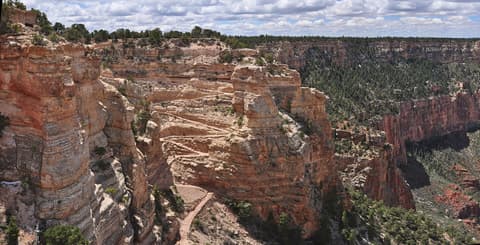
A ridge walk into the canyon with views from the first switchback
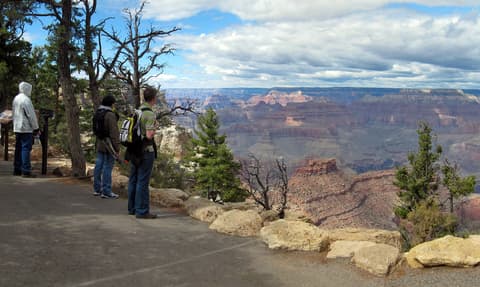
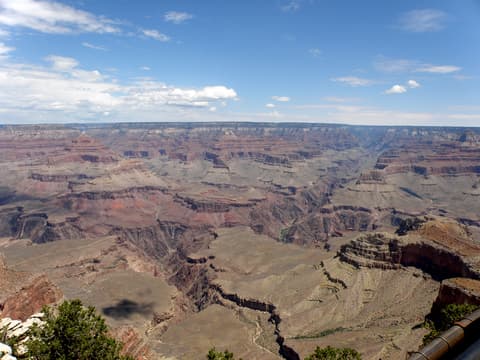
The South Rim's first big view, steps from the Visitor Center
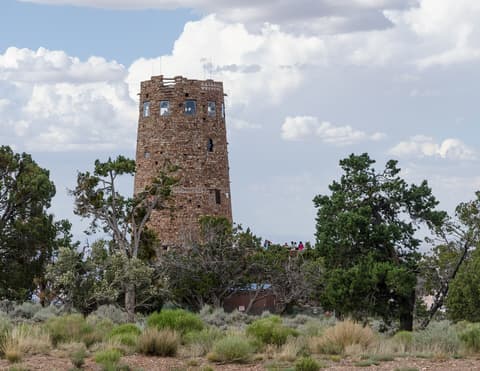
Stone tower rising 7 stories designed in 1932 by Mary Colter, a pioneering Grand Canyon architect.
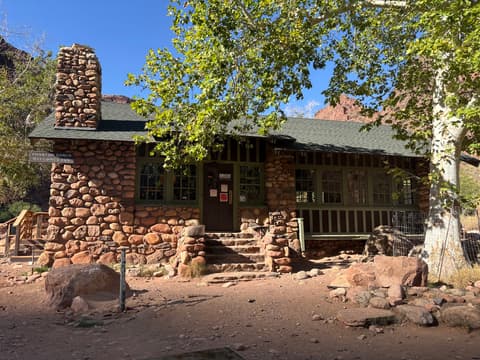
Rustic cabins & dorms in a stone lodge below the Canyon rim, plus a canteen offering meals.
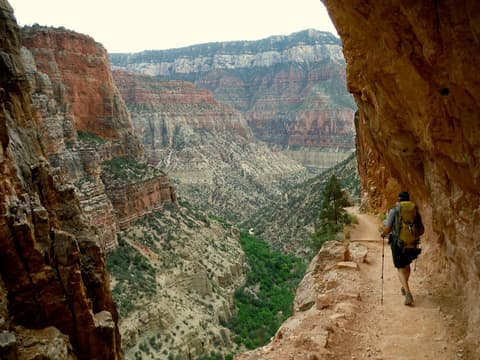
The North Rim's steep, quiet descent into the canyon
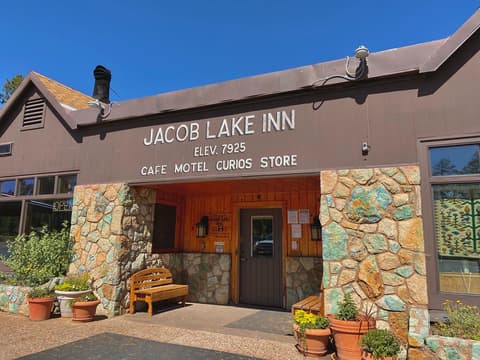
Wooded property offering hotel rooms, motel rooms & cabins, plus an American restaurant & a bakery.
Check the latest Grand Canyon National Park conditions, hourly outlook, and 16-day forecast before you go.
View Live Grand Canyon National Park Weather →