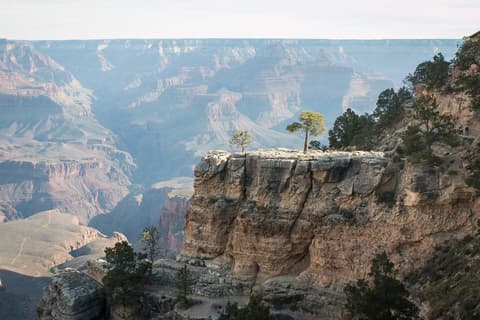
Day HikeGrand Canyon interior
Bright Angel Trail
The classic descent from the South Rim toward the Colorado River
(0)
Grand Canyon July weather: South Rim highs near 84F, inner canyon up to 106-120F. Monsoon storms, North Rim day-use status, and what to pack.
July is the hottest month at Grand Canyon National Park, and also one of the busiest and stormiest. The South Rim sits at about 7,000 feet, so afternoons stay warm but not brutal, while the inner canyon drops in elevation and turns into a genuine desert oven. Monsoon season is fully underway by mid-July, which means clear mornings can turn into fast-building thunderstorms by early afternoon. Understanding the split between rim and canyon-floor conditions is the single most useful thing to know before you plan a July visit.
This month suits visitors who want long daylight hours for rim sightseeing, scenic drives, and short viewpoint walks, but it is a tough and potentially dangerous month for anyone planning a serious inner-canyon hike. Early risers who can beat the heat, and travelers comfortable adjusting plans around afternoon storms, will get the most out of a July visit.
On the South Rim, July days average a high near 84°F with overnight lows dropping to around 54°F, so mornings and evenings are genuinely pleasant even when midday sun is strong. Rainfall averages about 1.8 inches for the month, well above the drier late-spring months, and most of it falls in short, intense afternoon thunderstorms rather than steady rain. Humidity stays low outside of storm activity, so the heat is dry until a monsoon cell rolls in.
Drop into the inner canyon and the numbers change fast. At Phantom Ranch, near the Colorado River at about 2,500 feet elevation, July's average high runs around 106°F, with readings above 115°F common during heat waves and a recorded high near 120°F. Expect inner canyon temperatures to run 20 to 25 degrees hotter than whatever the rim is reporting. A comfortable 84°F afternoon on the rim can mean a dangerous 105-plus degrees at river level.
July is peak season at the South Rim — school's out, and it's the single busiest stretch of the year for Grand Canyon Village, Desert View Drive, and the main rim viewpoints. Parking fills early at popular overlooks like Mather Point and Yavapai Point, and shuttle buses run at their most frequent summer schedule to handle the volume. The North Rim, even with its reduced 2026 footprint, still draws a steady stream of day-use visitors, so expect a wait at the entrance station and limited parking near Bright Angel Point.
Arrive at popular viewpoints early in the morning, before the day's heat and crowds both build, and lean on the shuttle system rather than searching for rim parking during midday.
With rim viewpoints, Grand Canyon Village services, and the Rim Trail fully open, July favors easing into the park early in the day: catch sunrise or mid-morning light at Mather Point or Yavapai Point, drive Desert View Drive, and use the shuttle system to reach overlooks without hunting for parking. On the North Rim, a day trip to Bright Angel Point and a stroll on the North Kaibab Trail are reasonable options while lodging there remains closed for the season.
Save any inner-canyon hiking for the earliest hours of the day, and treat the afternoon as a time to be back on the rim, in shade, or indoors rather than out on exposed trail.
Layer for a wide temperature swing: a light long-sleeve shirt for cool mornings, breathable sun-protective clothing for midday, and a packable rain layer for the near-daily chance of afternoon storms. A wide-brim hat and high-SPF sunscreen matter more in July than any other month, since UV exposure at elevation is intense even through haze. If you're hiking into the canyon, carry more water than you think you need — at least one gallon per person for a full day below the rim — plus electrolyte packets or salty snacks to offset heavy sweating. Sturdy, broken-in footwear helps on the loose, dusty trail surfaces that monsoon rain can turn slick fast.
The South Rim runs at full capacity in July: all rim viewpoints, Grand Canyon Village services, the Rim Trail, and both Bright Angel and South Kaibab trails are open, with no seasonal closures on this side of the park. Trail surfaces are dry and dusty this time of year, and heat is the primary hazard rather than ice or snow.
The North Rim is a different story in 2026. It reopened for the season on May 15 after the 2025 Dragon Bravo Fire, which burned roughly 145,000 acres and destroyed the historic Grand Canyon Lodge along with more than 70 other structures. For 2026, the North Rim is day-use only, with no overnight lodging anywhere on the rim. The campground is open on a reduced basis, but showers and laundry are closed, and there's no potable water on-site — bottled water is sold at the General Store near the entrance. The North Kaibab Trail is open for foot traffic only (no stock use), and hikers should expect occasional trail work and short delays from ongoing rehabilitation. Book a room or campsite in nearby Kanab or Jacob Lake ahead of time, bring your own water reserves, and check the park's North Rim status page and nps.gov before you go.
Average temperature and precipitation across the year — July highlighted.
The classic descent from the South Rim toward the Colorado River
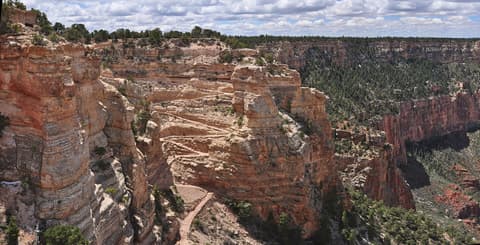
A ridge walk into the canyon with views from the first switchback
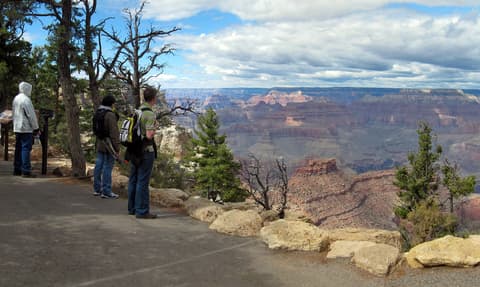
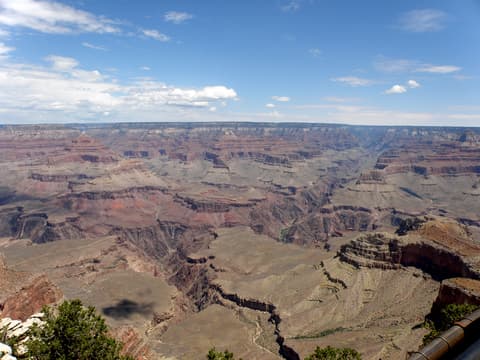
The South Rim's first big view, steps from the Visitor Center
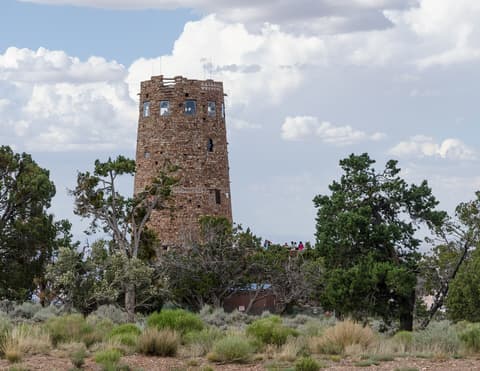
Stone tower rising 7 stories designed in 1932 by Mary Colter, a pioneering Grand Canyon architect.
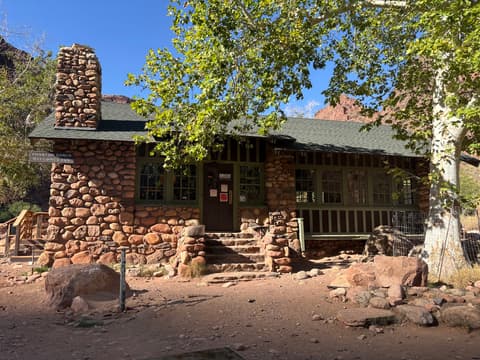
Rustic cabins & dorms in a stone lodge below the Canyon rim, plus a canteen offering meals.
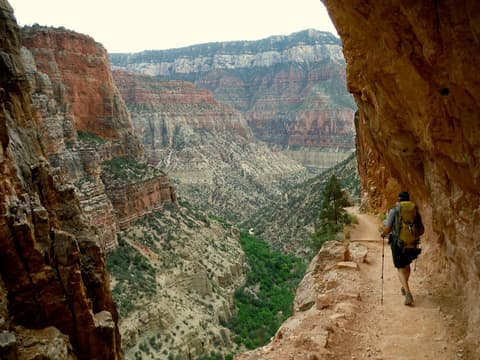
The North Rim's steep, quiet descent into the canyon
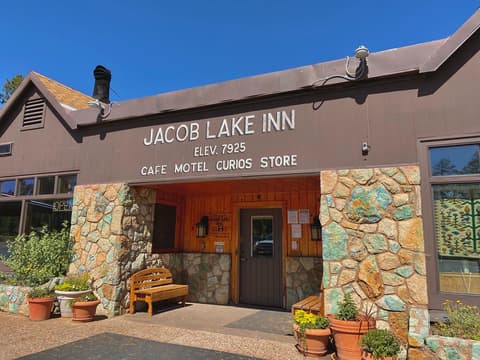
Wooded property offering hotel rooms, motel rooms & cabins, plus an American restaurant & a bakery.
Check the latest Grand Canyon National Park conditions, hourly outlook, and 16-day forecast before you go.
View Live Grand Canyon National Park Weather →