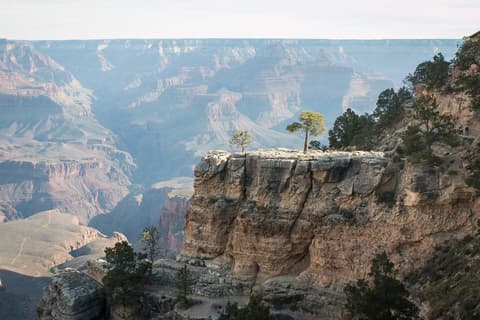
Day HikeGrand Canyon interior
Bright Angel Trail
The classic descent from the South Rim toward the Colorado River
(0)
Grand Canyon May weather: South Rim highs near 70F, inner canyon near 92F. North Rim reopened day-use only in 2026. What to pack and expect.
May is one of the best months to visit Grand Canyon National Park. The South Rim settles into a comfortable stretch of dry, mild weather, so mornings still call for a jacket even as afternoons feel like short-sleeve weather. May sits right at the front edge of peak season on the South Rim: spring break crowds have thinned out, but summer break hasn't started yet, so weekdays can still feel manageable, especially early in the month.
The month suits visitors who want reliably pleasant rim weather without full summer crowds or full summer heat in the inner canyon. It's a good fit for rim-focused sightseeing, sunrise and sunset viewpoint visits, and early-morning hikes, though anyone planning to descend into the canyon needs to take the heat down at the bottom seriously, since the first 100°F days at Phantom Ranch typically show up by month's end.
On the South Rim (7,000 feet), daytime highs sit near 70°F with overnight lows dropping to around 39°F, so mornings are still in the 30s and 40s. Rainfall is light, averaging under an inch for the month, but snow flurries and hard frost are possible in early May, especially at sunrise on the rim. Humidity is low and sun is strong at altitude.
Down in the inner canyon, the story is different entirely. At Phantom Ranch, along the Colorado River, average highs climb to around 92°F with lows near 63°F, and the first 100°F days of the year typically show up by month's end. The mile of elevation between the rim and the river means temperatures in the canyon run roughly 20 to 25 degrees hotter than the rim on the way down.
May sits right at the front edge of peak season on the South Rim. Spring break crowds have thinned out, but summer break hasn't started yet, so weekdays can still feel manageable, especially early in the month. Weekends and the back half of May get busier as school years wind down and temperatures become reliably pleasant.
Parking at Grand Canyon Village and the main South Rim viewpoints fills up by mid-morning on weekends, so early arrival or the shuttle system is the better bet. Because the North Rim is only just reopening and running with reduced services, expect a quieter, more subdued visitor experience there this year compared to a typical May. Book lodging and tours well in advance, since May demand is rising fast, and consider a weekday visit to avoid the thickest crowds at overlooks like Mather Point and Yavapai Point.
Start hikes below the rim early to beat the heat, and remember that any trip down into the canyon means climbing back out in warmer afternoon temperatures than you started in. Sunrise and sunset viewpoint visits are especially rewarding in May's clear, dry weather, and popular overlooks like Mather Point and Yavapai Point are worth visiting early before crowds and parking fill up.
If the North Rim is part of your plans this year, check current park alerts first, since day-use-only access, fire recovery work, and limited facilities mean the experience differs from previous years. Driving Highway 67 and stopping at viewpoints along Cape Royal Road and Point Imperial Road is possible for day use, but plan to stay in a gateway community such as Kanab, Jacob Lake, or Fredonia and bring your own food and water.
Layers are the theme for May. Mornings on the rim can start in the 30s, so bring a warm layer, hat, and gloves for sunrise viewpoints, but plan to shed them by midday as temperatures climb toward 70°F. Sun protection matters more than the mild rim temperatures suggest, since high elevation and thin air mean sun exposure is intense, so sunscreen, sunglasses, and a wide-brim hat are worth packing regardless of how cool it feels.
If you're hiking below the rim, bring more water than you think you need. The park service recommends at least a liter per hour of hiking in warm conditions, plus electrolyte replacement, since heat-related illness is the most common reason hikers need rescue in the canyon during spring and summer.
Drop into the canyon on the Bright Angel or South Kaibab Trail and the temperature climbs fast, with Phantom Ranch at the bottom regularly hitting the 90s in May. Hiking during midday heat there is genuinely dangerous, and rangers advise hiking down early and avoiding the inner canyon between 10 a.m. and 4 p.m. once temperatures start climbing.
The South Rim operates year-round with full services: lodging, restaurants, the visitor center, and shuttle buses run normally in May. The North Rim normally stays closed from mid-October through mid-May due to snow on State Route 67. For 2026, it reopened in mid-May as day-use only, with no in-park lodging or camping, since the historic Grand Canyon Lodge and dozens of other structures were destroyed in the 2025 Dragon Bravo Fire. Visitors can still drive Highway 67 to viewpoints along Cape Royal Road and Point Imperial Road, but should plan on staying outside the park and bringing their own food and water.
Average temperature and precipitation across the year — May highlighted.
The classic descent from the South Rim toward the Colorado River
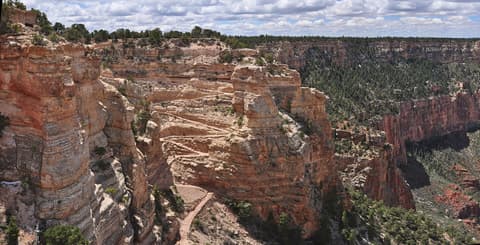
A ridge walk into the canyon with views from the first switchback
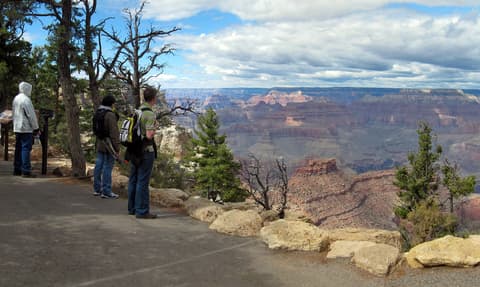
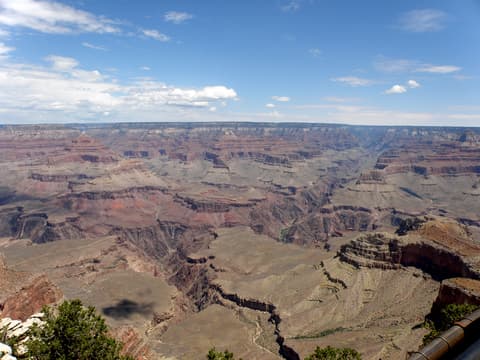
The South Rim's first big view, steps from the Visitor Center
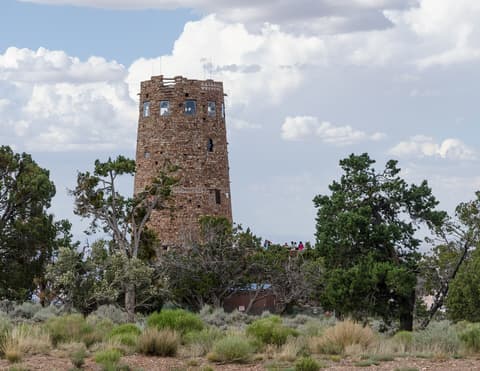
Stone tower rising 7 stories designed in 1932 by Mary Colter, a pioneering Grand Canyon architect.
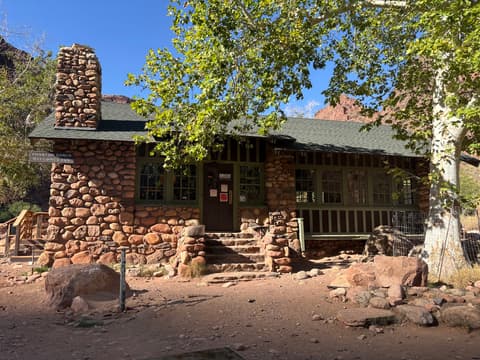
Rustic cabins & dorms in a stone lodge below the Canyon rim, plus a canteen offering meals.
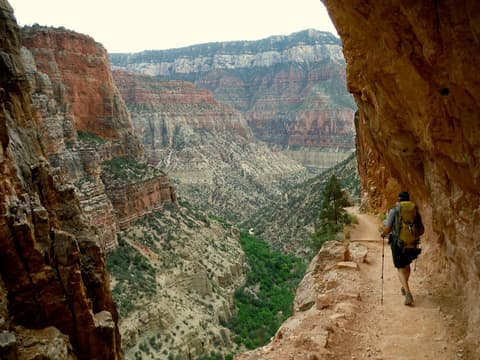
The North Rim's steep, quiet descent into the canyon
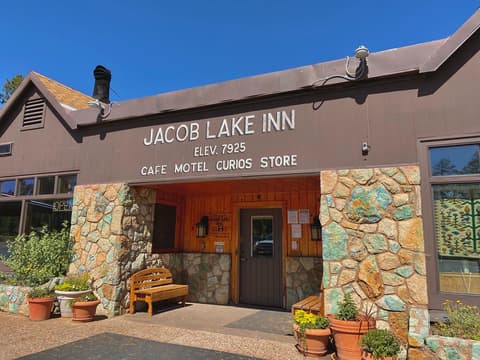
Wooded property offering hotel rooms, motel rooms & cabins, plus an American restaurant & a bakery.
Check the latest Grand Canyon National Park conditions, hourly outlook, and 16-day forecast before you go.
View Live Grand Canyon National Park Weather →