Picking a South Rim viewpoint for sunset is the easy part. Getting to it is where most first plans fall apart. The Grand Canyon sunset viewpoints that guidebooks name most often sit on Hermit Road. That road is closed to private vehicles from March 1 through November 30. The shuttle replacing those cars stops running one hour after the sun goes down, check our shuttle planner for the exact last-bus time before you go. Miss the last bus and the walk back toward Grand Canyon Village is seven miles in the dark.
Golden hour here is less about finding a secret overlook and more about matching a viewpoint to how you plan to get there. Some points are drive-up. One is shuttle-only. One of the best-known sunset spots on Desert View Drive is closed outright through late December 2026.
Everything below applies to the South Rim specifically. The North Rim, Grand Canyon West, and Havasupai are separate trips with separate rules, and the last section covers what changes at each.
Where to Watch the Sun Set on the South Rim
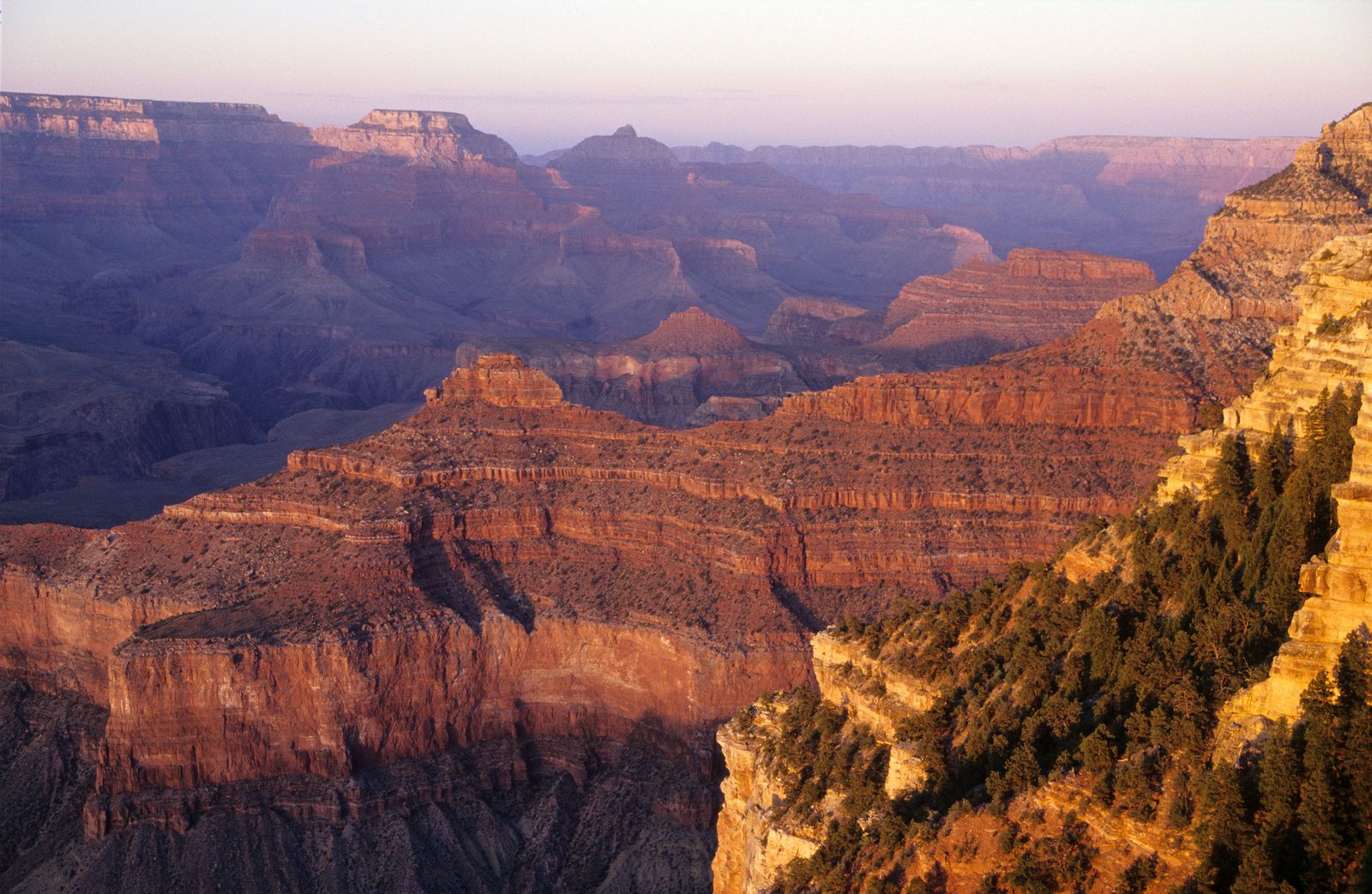
The National Park Service names Hopi Point first for sunset, and the reason is geometry. Hopi sits farther out into the canyon than its neighbors, so the sightlines open up on both sides. NPS calls it "an ideal location for sunrise or sunset." Mohave Point and Pima Point sit along the same road and pull smaller crowds. Pima is where, on a still evening, the Colorado River is sometimes audible from the rim.
All three sit on Hermit Road. That is the constraint worth planning around.
- Hermit Road closes to private vehicles from March 1 through November 30 each year.
- The free Hermit Road (Red) Route shuttle covers it during those months. First bus is 8 am, and the last bus runs one hour after sunset.
- From December through February, private vehicles under 22 feet can drive the road directly.
- The shuttle round trip takes about 80 minutes without stops, so build the ride back into the plan.
- Hopi Point has vault toilets. Several other overlooks along the road do not.
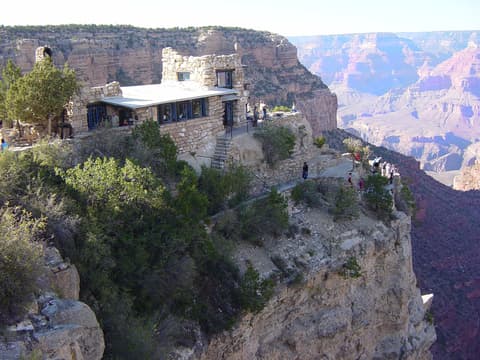
For a sunset with no bus schedule attached, Yavapai Point is the strongest drive-up option on the South Rim. It has its own parking lot, the Kaibab Rim (Orange) Route stops there, and restrooms sit along the north side of the lot. The Yavapai Museum of Geology is open daily until 8 pm, which in August keeps it open straight through sunset. That matters more than it sounds. The Desert View Watchtower, 23 miles east, closes at 7 pm and is locked before the sun goes down in late summer.
Mather Point is the other easy option, a five-minute walk from the Grand Canyon Visitor Center. NPS describes it as popular for both sunrise and sunset year-round. Popular is doing real work in that sentence. It is the most crowded overlook in the park at either end of the day, and the lots fill well before the light does. Desert View, out at the park's east entrance, is the quietest of the well-known choices, and it has gas, a market, and restrooms.
Direction is worth a thought before you commit. The canyon runs roughly east to west here, so late light rakes along the side canyons rather than hitting the rim head-on. That is why points pushing out into the canyon, like Hopi and Pima, hold color longer. Overlooks set back against the rim lose it sooner.
Where to Be Standing at Sunrise
NPS points sunrise visitors toward Mather Point or Yaki Point, and Yaki is the more interesting recommendation. It is the only scenic viewpoint on Desert View Drive that private vehicles cannot reach. Getting there means the Kaibab Rim (Orange) Route shuttle, a bicycle, or your own feet. That restriction is exactly why it works, since no car traffic buys a kind of quiet Mather Point gave up long ago. It faces east, toward the Desert View Watchtower in the distance, and it has restrooms and picnic tables.
The Orange Route is also why sunrise planning differs from sunset planning. In summer its first bus runs at 5 am, early enough to reach Yaki Point before the sun clears the horizon. The Hermit Road shuttle does not start until 8 am. So Hopi Point, the headline sunset viewpoint, is off the table for sunrise from March through November. The exceptions are walking the Rim Trail or riding a bike out. In December, January, and February the road opens to cars again and sunrise at Hopi becomes possible.
Mather Point stays the practical default for anyone based in Grand Canyon Village. It faces the right direction, it is wheelchair accessible, and it is a short walk from parking lots 1 through 4. Expect company. Hikers heading below the rim at first light have a different problem entirely, covered in our Bright Angel Trail guide.
How Early to Arrive, and When to Leave
The park's own timing guidance is more generous than most visitors assume, and it is worth following literally.
- For sunset, NPS advises arriving "as much as 90 minutes before sunset" and staying "at least 10 minutes after the sun has set." The color often peaks after the sun is gone.
- For sunrise, arrive 30 minutes before the sun clears the horizon and stay an hour or longer afterward.
- Dress warmer than the forecast suggests. NPS notes that "even summer dawns can be quite chilly" up on the rim.
- If a thunderstorm builds, count the gap between the flash and the thunder. Under 30 seconds means leaving the rim for shelter.
Times shift faster in late summer than people expect. On August 1, 2026, South Rim sunrise is 5:35 am and sunset is 7:33 pm. By August 25 those move to 5:56 am and 7:05 pm, nearly half an hour of change on both ends inside one month. Check the current date rather than a figure someone quoted in June. Our Grand Canyon weather guide covers what the rest of the day looks like around it.
One detail catches out-of-state visitors every year. Arizona does not observe daylight saving time, so the South Rim, Tusayan, Williams, and Flagstaff stay on Mountain Standard Time all year. Driving in from Utah or Nevada, your car clock may sit an hour off from the one the shuttle drivers are using. Route and parking details live on our getting around page.
What Is Closed Right Now, and What That Changes
Lipan Point appears on nearly every best-sunset list written about the South Rim, and it is currently unavailable. Lipan Point and Lipan Point Road closed to all visitor use on June 22, 2026, for a project covering asphalt removal and trail reconstruction. The closure is expected to run through December 23, 2026. The Tanner Trail stays open during construction. Hikers park at No Name Point instead, about 1,000 feet west of Lipan Point Road on Highway 64.
Any list still recommending Lipan for this year's sunset was written before that announcement. That is worth checking against every set of Grand Canyon sunset viewpoints you read this season.
The North Rim is a different trip, not a second option for the same evening. It reopened for the 2026 season on May 15, after the 2025 Dragon Bravo Fire. It is running as day use with very limited services. There is no lodging and no potable water anywhere on the North Rim this season, including at the North Kaibab Trailhead. Point Imperial Road and Cape Royal Road are open. Anyone planning golden hour up there carries all their own water in.
Two other places share the Grand Canyon name and sit outside the national park entirely. Grand Canyon West and the Skywalk are on Hualapai tribal land, with their own admission system. Havasu Falls is on the Havasupai Reservation, with permits sold directly by the tribe. A national park pass covers neither, and neither is a realistic sunset detour from the South Rim.
So, the short version. Pick the viewpoint that matches your ride. Get there earlier than feels necessary, and stay past the moment everyone else starts walking back to the parking lot. The best ten minutes usually happen after the sun is already gone. Browse South Rim listings to fill in the rest of the day around it.